
The Engineering Behind 10-Minute Deliveries: Real-Time Inventory & Dark Store Routing Software
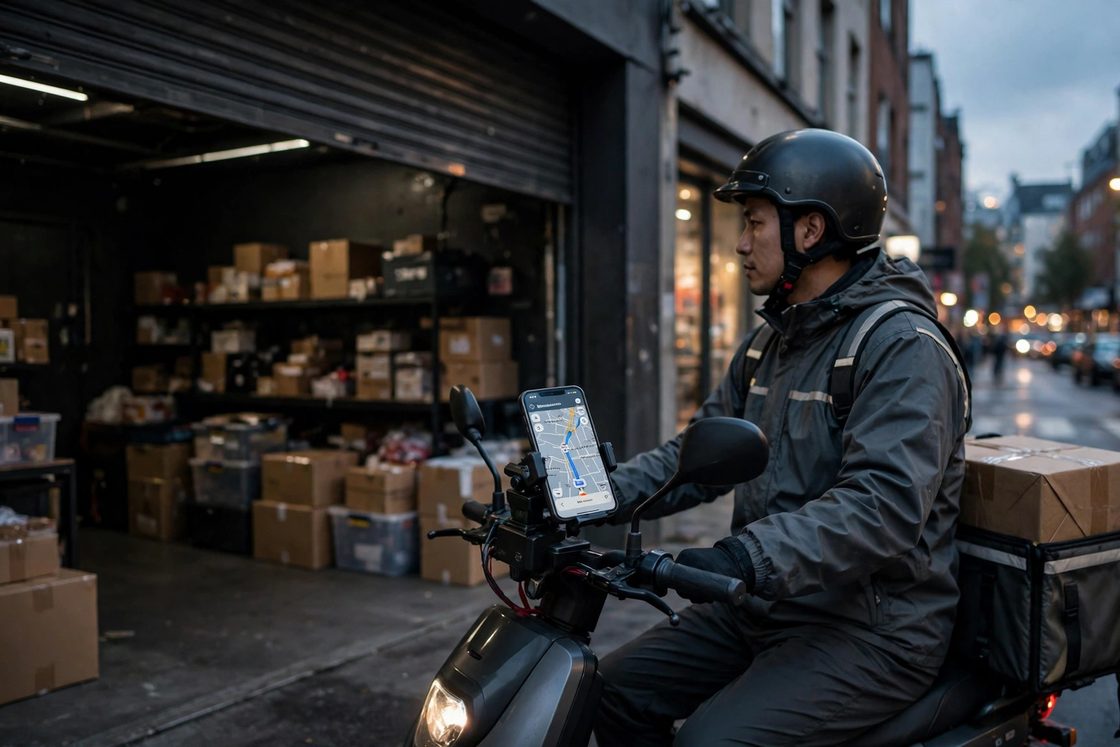
Ten minutes. That is the promise on the screen when you order milk, bread and eggs: at your door before you have finished making tea. Behind that promise is not a faster rider. It is a system that had the order packed before you tapped buy, and a rider already nearby. The ten minutes are mostly won before the order exists.
This article follows one order minute by minute, then opens up the four systems that make it possible: live inventory, dark stores, routing and batching. Blinkit, Zepto and DoorDash are named here as public examples of the model, Nothing about their internal numbers appears below — no order volumes, no rider counts, no internal metrics, because those figures are theirs and we do not invent them.
One order, minute by minute
It is 7:42 in the evening. A customer orders milk, bread, eggs and biscuits. Here is what the next ten minutes look like from inside the system.
| Clock | What happens |
|---|---|
| 0:00 | The order arrives. The system checks live inventory at the nearest dark store before confirming. |
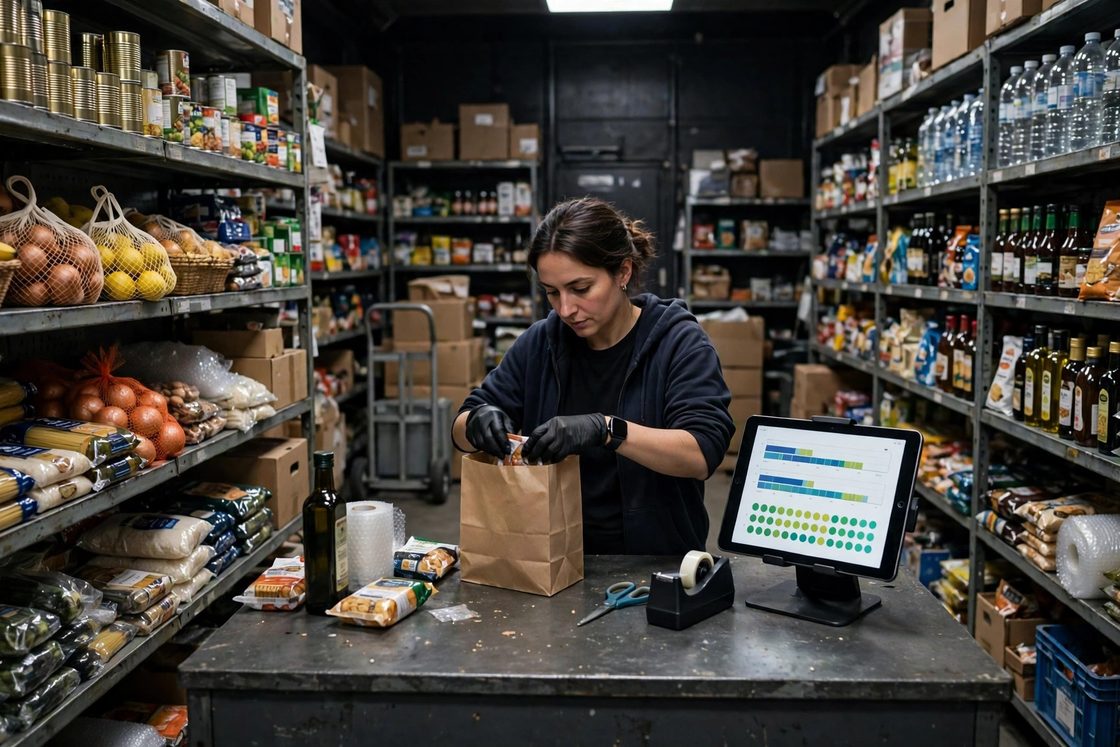
| 0:20 | The order is split into pick tasks and pushed to a picker's handheld device, ordered by the fastest walking route through the store's aisles. |
| 0:30 | A rider is assigned — the nearest rider who will be free when the bag is ready, about two minutes from now. |
| 1:00 | Picking starts. Four items, four known shelf positions, one bag. Each scan decrements live stock at once. |
| 2:30 | The bag is sealed and handed to the rider at the store door; the rider's app already has the route. |
| 3:00 | The rider leaves. The customer sees live tracking — the estimate is now a fact, because the bag is already on the bike. |
| 7:00 | The rider reaches the society gate — the last hundred metres are the slowest part of any delivery. |
| 9:30 | Handover at the door. The rider marks the delivery complete, closing the order and freeing the rider for the next assignment. |
Two things stand out. The order was confirmed only after the inventory check, and the rider was assigned while picking was still happening — so packing and travel overlap instead of running one after the other. Ten minutes is four ordinary steps run in parallel.
Live inventory: the shelf that never lies
Everything in quick commerce depends on one number being right: how many units of each item are on the shelf, right now. If the app shows milk in stock and the shelf is empty, the order fails at the worst moment — after the customer has paid and waited.
Each dark store keeps its stock in a system that updates on every scan. When a picker scans the milk for your order, the count drops by one immediately. When a delivery van restocks the store, the count rises by the scanned quantity. The app shows the count as of the last scan, seconds ago.
A damaged packet, a miscounted delivery, a picker who grabs the wrong flavour — each one puts the system's number off by one, and those ones accumulate.
Dark stores: small warehouses, short distances
A dark store is a warehouse that looks like a shop but has no customers. Just shelves arranged for picking speed, a packing counter, and a door where riders collect bags.
The point of the dark store is distance. A traditional warehouse on the edge of a city cannot deliver in ten minutes, however fast its riders are — the ride itself takes longer than the promise. A network of stores, each serving a radius of two to three kilometres, puts the shelf within a short ride. The model only works if orders in that small radius are dense enough to keep the store busy.
Routing and batching: the maths of the last mile
With the bag packed and the rider assigned, the remaining problem is routing — and it is smaller than it looks, because the distances are short and the orders are few per rider. A rider typically carries one order, sometimes two, and the route is a short hop. The routing system picks the right rider and the right order of drops, in under a second.
Assignment is the interesting half. The naive rule — give the order to the nearest rider — fails when that rider is still finishing another delivery and will be free in four minutes, while a slightly further rider is free now. Good assignment weighs readiness, not just distance. A simple version of the scoring looks like this:
def score_rider(rider, order, now):
    # Lower score wins. All inputs come from live state, not estimates.
    eta_to_store = travel_time(rider.location, order.store_location)
    ready_in = max(0, rider.free_at - now)  # seconds until current job ends
    bag_fits = 0 if rider.bag_space >= order.bag_size else 10_000
    return eta_to_store + ready_in + bag_fits

def assign(order, riders, now):
    candidates = [r for r in riders if r.on_shift and r.in_zone(order.zone)]
    return min(candidates, key=lambda r: score_rider(r, order, now))
Batching is the second lever: two orders going to the same society, picked at the same store, can ride on one bike. Operators batch only when both orders are ready together and the drop points are close — a batched delivery arriving in fourteen minutes breaks the promise for both customers. The rule is simple: batch when it costs nobody anything.
The components, side by side
| Component | What it does | What happens if it is wrong |
|---|---|---|
| Live inventory | Tracks stock per item per store, updated on every scan | Orders promised for items that are not on the shelf |
| Dark store network | Puts stock within a short ride of the customer | Deliveries that cannot physically arrive in ten minutes |
| Picking system | Orders pick tasks by the fastest walking route | Picking takes four minutes instead of ninety seconds |
| Assignment engine | Matches each order to the rider who will be ready first | Riders idle while orders wait, or the wrong rider is sent |
| Routing | Chooses the drop order for batched deliveries | A rider crosses the zone twice for two nearby drops |
| Live tracking | Reports rider position and recomputes the estimate | Customers see a stale estimate and lose trust |
| Payment & refunds | Charges on confirmation, refunds on cancellation | Charged customers with no delivery, or double charges |
A perfect routing engine cannot save an order promised against stock that did not exist, and perfect inventory cannot save an order assigned to a rider who is still busy. The promise is a chain, only as strong as its weakest link.
Failure modes: how ten minutes becomes twenty
The first failure mode is the stockout after confirmation — the item was on the shelf when the order was placed and gone by the time the picker reached it, because another order took the last unit seconds earlier. Reservation handles this: the moment an order is confirmed, its items are reserved, so a second order cannot claim the same packet of biscuits.
The second is the rider delay at the gate. Housing societies, office lobbies and campuses all add friction at the last hundred metres: a guard who needs an entry, a lift that takes three minutes, a customer who does not answer.
The fourth is the surge. Rain, a festival evening, a cricket final — demand can double in an hour, and the store has the same pickers and the same riders. The honest response is to lengthen the promise before the customer orders — fifteen minutes instead of ten — or pause new orders for the busiest store. A system that keeps promising ten minutes while its riders are twenty minutes behind does not have a speed problem. It has a honesty problem, and customers remember the second one longer.
What to do next
If you run deliveries of any kind, the lesson of the ten-minute model is not to copy the ten minutes. Copy the discipline: confirm only what the shelf can keep, overlap packing and travel, assign riders by readiness rather than distance, and lengthen the promise honestly when demand surges. We build the software side of operations like this — live inventory, order routing and tracking dashboards — through E-Commerce Development from ₹14,999 and Custom API & Backend Development, with rider and customer apps via Mobile App Development from ₹29,999. Get an instant estimate, or tell us about your delivery operation on WhatsApp.