
How Much Does a Website Cost in India in 2026

Ask five people what a website costs in India and you will get five different answers: ₹5,000, ₹25,000, ₹80,000, ₹1.5 lakh, and a polite refusal to name a number at all. All five can be honest — they are quoting for different things. A one-page site for a launch and a store with a hundred products and a payment gateway are not the same job. The price is the scope. This guide gives the 2026 market ranges published by Indian studios and cost guides, source named each time.
The short answer: cost by type of site
The ranges below come from 2026 guides published in India. They are planning ranges, not quotes, excluding GST. A quote far below the range usually leaves something out; a quote far above it needs a clear reason.
| Type of site | Typical range (one-time) | Typical timeline |
|---|---|---|
| Landing page (one page, for ads or a launch) | ₹5,000 – ₹20,000 | 1 – 2 weeks |
| Small business website (5 – 10 pages) | ₹15,000 – ₹75,000 | 2 – 4 weeks |
| Business website, custom design (5 – 15 pages) | ₹40,000 – ₹1,50,000 | 3 – 6 weeks |
| Small e-commerce store (up to about 100 products) | ₹50,000 – ₹3,00,000 | 4 – 8 weeks |
| Custom web app or SaaS MVP | ₹1,50,000 – ₹6,00,000+ | 6 – 12 weeks |
Neweb (November 2026): a small-business site, ₹10,000–₹80,000 from a freelancer, ₹40,000–₹1,50,000+ from an agency. Nuwizo (3 October 2026): a 5–10 page business site, ₹15,000–₹40,000 from a freelancer, ₹50,000–₹1,50,000 from an agency; a small store, ₹40,000–₹1,50,000 from a freelancer, ₹1,00,000–₹3,00,000 from an agency. Hostinger India's 2026 guide: agency e-commerce from ₹1,50,000 to ₹4,00,000+.
Three ways to get a website built
Three routes, each trading money for time and control.
| Route | Typical cost | What you get | The catch |
|---|---|---|---|
| Do it yourself (builder) | ₹1,700 – ₹19,000 a year | Live in days, no developer needed | Monthly fee forever |
| Freelancer | ₹15,000 – ₹80,000 one-time | One person's full attention, lower price | If they vanish, the site waits |
| Agency | ₹40,000 – ₹1,50,000+ one-time | A team, a written scope, after-launch support | The highest price |
A builder — Wix, Squarespace, Hostinger, GoDaddy, Zoho Sites — is the cheapest way online, and often the right one for a simple site. Neweb (November 2026) puts a builder site at about ₹1,700 to ₹19,000 a year, but you pay with your own time: 15 to 30 hours to build and fill it. See our no-code vs custom websites guide for that trade-off. A freelancer, at ₹500 to ₹3,000 an hour by the guides' figures, is the middle route — judge one by the last three sites they shipped, and get ownership of the code and hosting in writing before paying. An agency costs the most because the price covers a team and continuity: someone answers six months later when a page breaks. Ask not "how much" but "what is included, and what happens after launch".
What pushes the price up — and what keeps it down
Five things decide where your quote lands.
1. How many pages, and how different they are
Ten pages sharing one layout cost far less than ten pages each designed separately. Count the distinct layouts, not the pages.
2. Design: template, adapted, or custom
A template with your colours and logo is the fastest and cheapest route, and for many small businesses it is enough. An adapted design costs more and looks like your business. A fully custom design costs the most, and is the only option when the site itself is the product. Our own work sits in the middle: custom pages in plain HTML and CSS.
3. E-commerce: products, payments, and the work behind the button
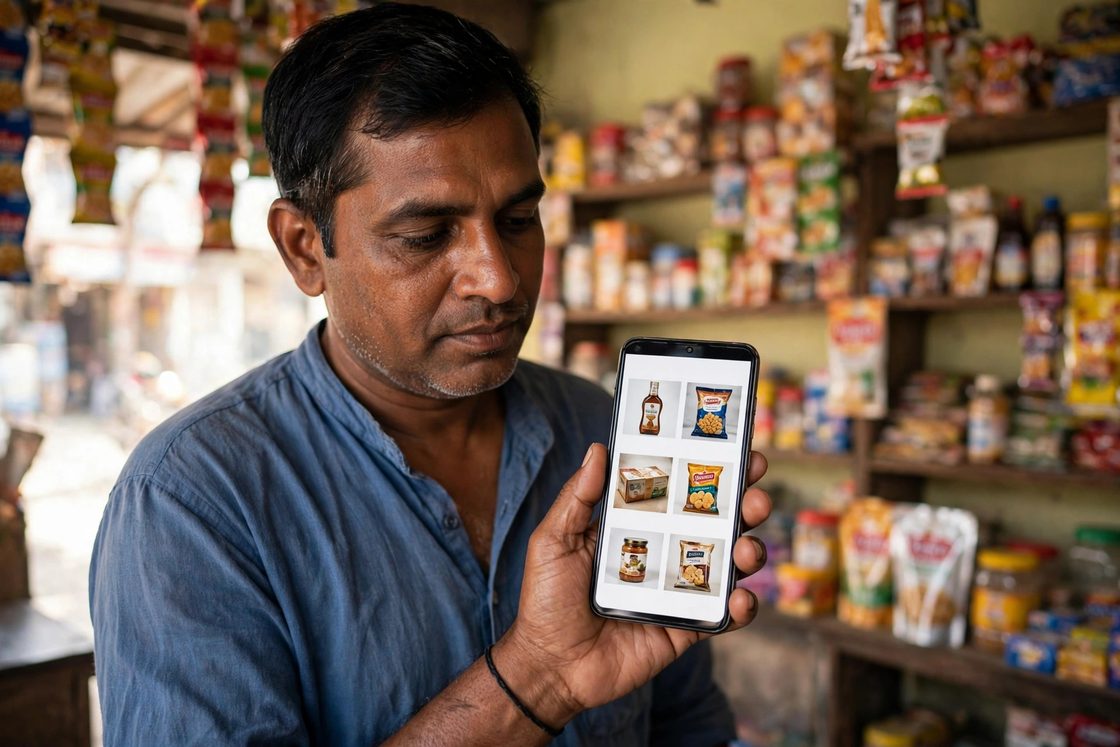
A store is not a website with a cart glued on. The price follows the catalogue size, the payment gateway, shipping rules, coupons, order emails and the admin screen. A store with twenty products and one payment method is a small job; a store with a thousand products, filters and courier integration is a large one. The guides agree: a basic store roughly ₹25,000 to ₹60,000, a professional one ₹60,000 to ₹1.5 lakh. If a quote does not say who uploads the products, assume you are doing it — a hundred products at ten minutes each is two working days.
4. Integrations: the connections nobody sees
Every connection adds work: a payment gateway with webhooks, a booking flow, a WhatsApp chat that replies automatically, a sheet that fills itself when an order arrives, a CRM that logs every enquiry. Each one is small on its own, and together they are often a third of the build. List the integrations before asking for a price, and ask what each costs on its own.
5. Content and search: who writes it, and who makes it findable
A site with supplied text and photographs costs less than one where the developer must write the copy and structure every page for search. Basic on-page SEO — titles, descriptions, headings, structured data, a sitemap — belongs in a professional build. Ongoing SEO is separate: our SEO services start with a fixed quote after an audit.
The costs after launch
The build price is not the total price. The honest quotes list the running costs before you sign.
- Domain: roughly ₹800 to ₹1,500 a year for a .com or .in.
- Hosting: shared hosting from a few thousand rupees a year; a static site on an edge network costs less to run than a database-driven one.
- SSL certificate: usually free with modern hosting — but check, because some hosts still charge for it.
- Maintenance: updates, backups, small fixes, and someone to call when a page breaks. Budget roughly 15 to 25 percent of the build cost per year (Levaras, 2026 guide).
- GST: web development services in India generally attract 18% GST, so a ₹50,000 quote "plus GST" means you pay ₹59,000. Always ask whether a price is inclusive or exclusive.
Neweb (November 2026) puts domain and hosting together at about ₹3,000 to ₹8,000 a year. With maintenance, a ₹50,000 site costs roughly ₹8,000 to ₹15,000 a year to keep running well.
How to compare two quotes without getting fooled
Two quotes are only comparable when they describe the same website. Before you compare, make each one answer the same five questions.
- What exactly is included? Page count, layouts, copywriting, images, forms, integrations, SEO setup, and who uploads the content.
- Who owns what? The code, the domain, the hosting account and the content must be yours, in accounts under your control.
- What does the timeline look like? A staging link to review before launch, and an agreed launch date.
- What happens after launch? How long fixes are free, what maintenance costs, and response times.
- How is payment split? Half upfront and half on delivery is standard practice in India; milestone payments for larger projects. Never pay everything before seeing the site work.
A quote that answers all five clearly is worth more than a cheaper one that answers none of them. The cheapest quote usually excludes content, revisions, SEO basics or post-launch support — and those exclusions arrive as extra bills later.
A worked example with real starting prices
Here is the same job at our own starting prices. A local clinic needs a business website — home, about, services, doctors, contact, five to seven pages — plus a WhatsApp button and basic SEO setup. That is a business website from ₹9,999, and the cost calculator shows the total as you add options: a payment gateway setup at +₹2,999, a WhatsApp Cloud CRM bot at +₹3,499, and a full schema SEO pack at +₹2,999. A landing page starts at ₹4,999, an e-commerce store at ₹14,999, a mobile app at ₹29,999, Python automation at ₹7,999.
The same logic applies to the market ranges above: a quote is only as good as the scope behind it. Write down the pages, the features, the integrations and who supplies the content, get two or three quotes against that one list, and compare them line by line. That is how a ₹5,000 quote and a ₹1.5 lakh quote stop being a mystery. If you want a number for your site, run the cost calculator, look at our custom web development and e-commerce development services, or tell us the scope on WhatsApp and we will send a fixed quote.