
Nvidia CEO Jensen Huang vs Sam Altman: Why the Tension Over AI Chips?

In September 2025, NVIDIA and OpenAI announced what looked like the biggest partnership in AI history: NVIDIA would invest up to $100 billion in OpenAI and supply at least 10 gigawatts of its next-generation systems. Six months later, NVIDIA chief executive Jensen Huang said the $100 billion figure was "probably not in the cards." What happened in between is the real story — and it is not a fight between two CEOs. It is a customer getting big enough to want a second supplier, and a supplier deciding its money is better spent elsewhere.
The $100 billion deal that was never signed
The September 2025 announcement was a letter of intent, not a signed contract: NVIDIA would invest in stages as each gigawatt of its systems came online. But by December 2025 its finance chief said no definitive agreement existed, the Wall Street Journal reported the deal frozen in January 2026, and the Financial Times reported it abandoned in February 2026.
What replaced it was smaller, but still enormous. On 27 February 2026, OpenAI announced a $110 billion funding round, with Amazon putting in $50 billion and SoftBank and NVIDIA $30 billion each. Then, on 4 March 2026, Huang explained the change at the Morgan Stanley Technology, Media and Telecom Conference. "We're going to invest $30 billion in OpenAI. I think the opportunity to invest $100 billion in OpenAI is probably not in the cards and the reason for that is because they're going to go public," he said, according to Reuters. He added the $30 billion was probably the last big check of its kind — and NVIDIA's $10 billion Anthropic stake probably its last too. OpenAI has still not gone public — Altman said in September 2026 that an IPO would not happen that year — but NVIDIA has not revived the $100 billion figure.
Why NVIDIA still holds the power
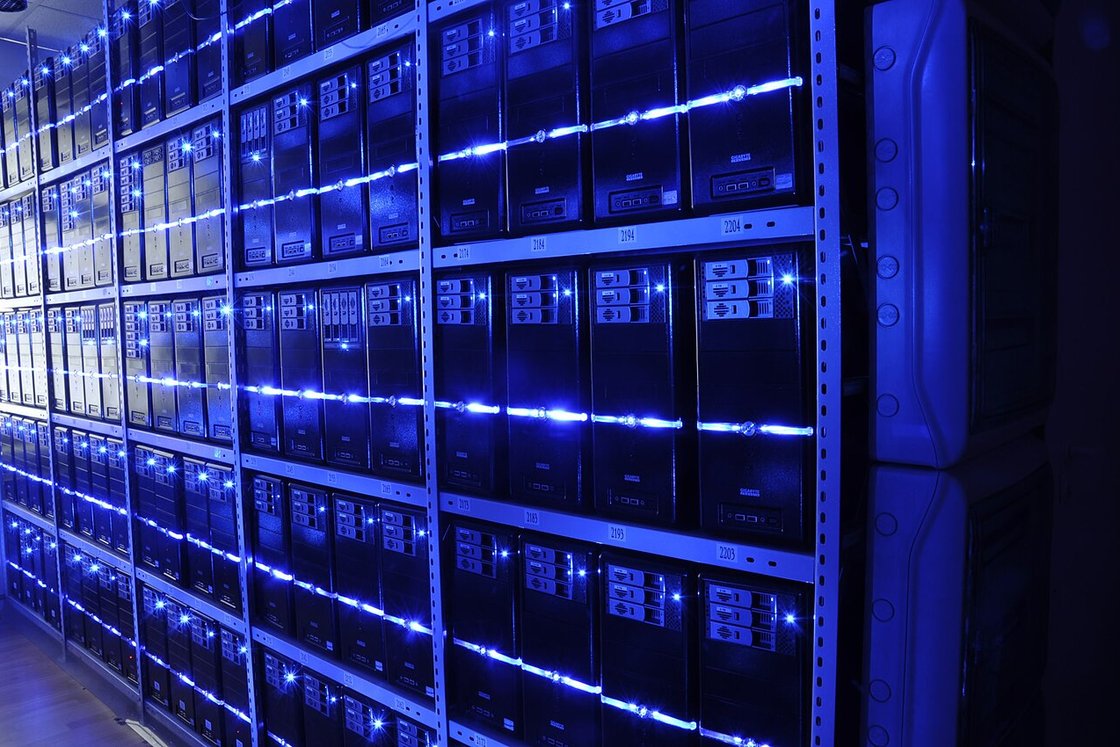
None of this changed who makes the chips. NVIDIA remains the incumbent supplier of the AI industry: its graphics processors run most of the world's large AI training, and every major AI lab still buys them. OpenAI's flagship Stargate campus in Abilene, Texas — part of the $500 billion, 10-gigawatt data-center programme announced with Oracle and SoftBank at the White House in January 2025 — runs on NVIDIA's GB200 systems. Demand is so strong that NVIDIA's revenue rose 106% year over year to $96.2 billion in the quarter that ended in July 2026. That is the leverage in this relationship: OpenAI can negotiate and diversify, but it cannot build its plans without NVIDIA hardware.
OpenAI's answer: three more suppliers
While the NVIDIA deal was shrinking, OpenAI was signing with everyone else. On 6 October 2025 it agreed at least 6 gigawatts of AMD Instinct GPUs, plus warrants for up to 160 million AMD shares. On 13 October 2025 came a 10-gigawatt plan with Broadcom for custom accelerators, deploying late 2026 through 2029. In January 2026 it signed a $10 billion deal with Cerebras for 750 megawatts of fast inference chips. Together, that is about 26 gigawatts of planned chip capacity across four suppliers, plus a $300 billion Oracle cloud contract signed in September 2025. Almost all of it is still a plan: the first systems arrive in late 2026, and the full rollout runs to 2029.
What it means for the AI industry, users and companies
For the industry, the message is that multi-vendor is now normal. Google builds its own TPU chips, Anthropic spreads its work across Amazon, Google and NVIDIA, and OpenAI now has four chip suppliers. No large AI lab wants one company controlling its most expensive input.
For ChatGPT users, the effect is indirect but real: more capacity should eventually mean faster responses and lower costs — but the new chips arrive slowly, scaling up through 2029, so the next year of AI progress still runs mostly on NVIDIA hardware.
For companies building on AI, the lesson is practical: do not bet your product on one supplier's roadmap, and do not read a headline number as a done deal — the $100 billion figure was a letter of intent, and it shrank to $30 billion in six months. NVIDIA is still the default for AI compute, but the era of one supplier for everything is ending. Companies whose systems can run on more than one kind of chip will keep shipping when the next deal changes shape. If you are planning that kind of system, our guide to AI coding tools and our guide to cutting infrastructure costs are a good place to start — or talk to us on WhatsApp about what you are building.